Medicare Supplement Plans
Medicare is available in several “parts” all of which are...
Read more →

As a new Medicare beneficiary, you have important decisions to make about the future of your healthcare. Unfortunately, understanding the “ins-and-outs” and selecting the right plan can be challenging.
All US citizens become eligible for Medicare when they turn 65. Non-citizen permanent residents are eligible at 65 also, provided they have lived in the country for at least five years.If you are under 65, you might qualify for Medicare if:
You are permanently disabled and have received Social Security Disability benefits for at least 24 months.
You have been diagnosed with end-stage renal disease (kidney failure)
You have been diagnosed with Amyotrophic Lateral Sclerosis (Lou Gehrig’s disease) and are receiving Social Security Disability benefits.
As with most large, complex government programs, Medicare can seem a bit overwhelming at first. That’s why we’ve created this guide to help you navigate the application procedure, annual enrollment, and more.
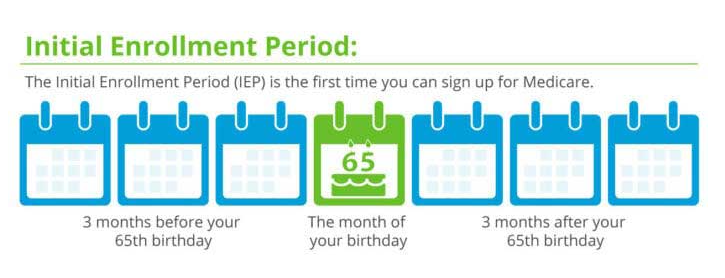
You become eligible for Medicare when you turn 65 years old. However, if you have already claimed Social Security benefits at that time, you will be automatically enrolled in Medicare on your 65th birthday. You will receive Medicare Parts A and B. To enroll in other Medicare programs, such as Part C (Advantage) or Part D (prescription) you must meet with an insurance professional to elect those benefits.
Those who have not already begun to draw Social Security benefits will need to apply for Medicare when they turn 65. The Initial Enrollment Period (IEP) begins three months before your 65th birthday, lasts throughout the month of your birthday, and then for three months after that. So, you have seven months in total to complete the enrollment process.
There is one exception to the above rule: If your birthday falls on the first day of the month, your IEP will begin one month earlier.
Yes, you should apply for Medicare at age 65, even if you aren’t claiming your Social Security benefits yet. In fact, you must apply for Medicare during this initial enrollment period. Otherwise, if you sign up later you will face higher premiums for the rest of your life. Only under very specific conditions can you delay enrollment without incurring a penalty.
The Medicare General Enrollment Period, from January 1 to March 31 each year, allows those who missed their IEP to enroll in Medicare.
Aside from qualifying for a Special Enrollment Period due to a life event, this is your only chance to apply for Original Medicare after your Initial Enrollment Period.
When you sign up for Original Medicare during the General Enrollment Period, your coverage will begin on the first day of the month following your enrollment. For example, if you enroll on February 3rd, your coverage would start on March 1.
Important Note: The General Enrollment Period is not a “safety net” for missing your IEP. This enrollment period should only be used as a backup if you miss your Initial Enrollment Period. Late penalties could apply if you enroll during the General Enrollment Period, so make sure you budget for those additional fees.
But once you make your selections, you aren’t stuck with those plans for life. In fact, Medicare offers you opportunities to change your plan(s), depending upon the situation.
Once you have enrolled in Medicare, you do have the right to review your plan selections and make changes each year. From October 15 to December 7, you can take advantage of the Annual Election Period to make changes to Part C (Advantage) or Part D (prescription) plans.At this time, you can:
Change from Original Medicare to a Medicare Advantage plan
Drop a Medicare Advantage Plan and go back to Original Medicare
Change from one Medicare Advantage plan to a different one
Enroll in a Part D prescription drug plan
Cancel your Part D prescription drug plan
Change your Part D prescription drug plan
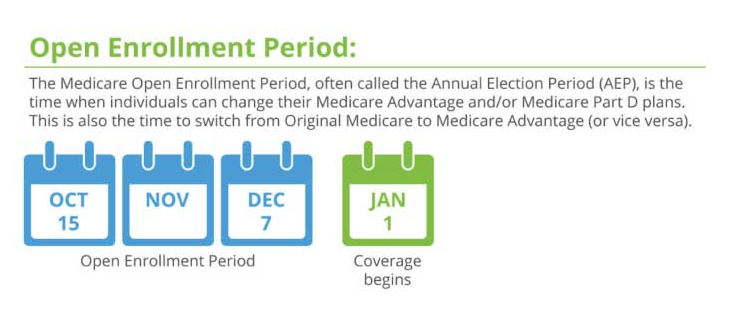
In the event that you change your mind about a Medicare Advantage Plan for any reason, the Medicare Advantage Open Enrollment Period from January 1 to March 31 gives you the opportunity to make changes.
During this time you can:
Switch from one Medicare Advantage plan to another
Drop Medicare Advantage and return to Original (Parts A and B) Medicare
Add a Part D prescription plan
Drop a Part D prescription plan
Yes, you can drop a Medicare Advantage plan and return to Original Medicare, but don’t count on a Medigap plan if that is your intention. Remember that carriers will screen you and can choose not to enroll you.
In certain situations, such as a move or loss of coverage, you might qualify for a two-month Special Enrollment Period. During this time you can make changes to your Medicare plan(s).For example, moving from one geographic area to another might qualify you for a Special Enrollment Period, if your network is not available at your new home.During your SEP, you can switch to a new Medicare Advantage plan or Part D plan, or return to Original Medicare without penalty. In some situations you might also be able to enroll in a Medigap plan without the requirement for medical underwriting (called guaranteed issue rights).
If you believe you might qualify for a Special Enrollment Period, you should contact your plan administrator as soon as possible after the qualifying event. We can assist you with this process.